
|
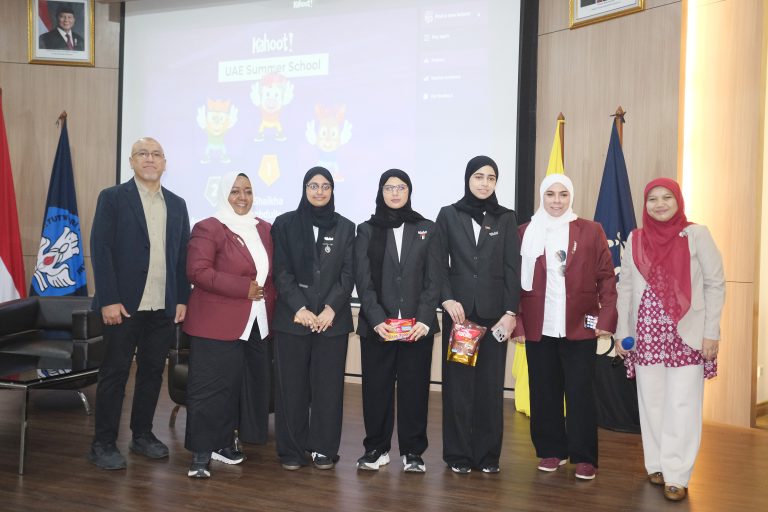
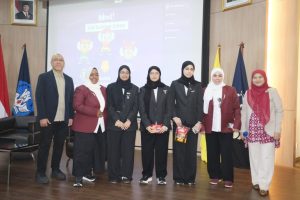
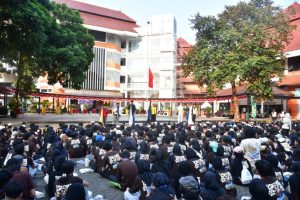
Depok, August 21, 2026 — The Faculty of Mathematics and Natural Sciences, Universitas Indonesia (FMIPA UI), served as a science learning destination for 26 high-achieving high school students from the United Arab Emirates (UAE) through the UAE High School–Universitas Indonesia Summer School Program 2026. Held from August 3–13, 2026, at the UI Depok Campus, the program introduced UAE high school students to an academic environment, laboratories, and multidisciplinary science learning experiences at one of Indonesia’s leading science faculties.
This intensive 10-day program was organized by FMIPA UI in collaboration with Calista Management LLC Dubai and the UAE Ministry of Education. In addition to the 26 students, the program also involved three accompanying teachers from the UAE.
Prof. Anom Bowolaksono, Ph.D., Vice Dean for Education, Research, and Student Affairs at FMIPA UI, said that the collaboration demonstrates confidence in FMIPA UI’s capacity to provide science education that integrates academic knowledge, laboratory practice, technology, and environmental issues.
“This collaboration reflects the trust placed in FMIPA UI’s capacity to provide multidisciplinary science education that is relevant to global challenges,” said Prof. Anom.
With academic disciplines spanning Mathematics, Physics, Chemistry, Biology, Geography, Geoscience, and various multidisciplinary fields, FMIPA UI provides participants with opportunities to explore science from diverse perspectives. This academic environment is also supported by learning activities that integrate theory, laboratory practice, field exploration, and collaborative projects.
This approach is reflected in the program’s theme, “Empowering Future Global Scientists through Innovation, Sustainability, and Collaborative Learning.” Participants were introduced not only to scientific concepts but also to their applications in addressing global challenges, ranging from clean energy and artificial intelligence to climate change and biodiversity.
In the Chemistry sessions, participants took part in a microscale electrochemistry experiment and a demonstration of a photoelectrochemical cell (PEC) for green hydrogen production, guided by Prof. Jarnuzi Gunlazuardi and Dr. Rahmat Wibowo. Participants also learned about Sustainable Chemistry and Hydrogen Energy, delivered by Muhammad Ridwan, S.Si., M.Eng., Ph.D.
Meanwhile, the Physics sessions featured a lecture on Artificial Intelligence (AI) and Medical Imaging delivered by Syahril Siregar, Ph.D. The session provided participants with an understanding of how artificial intelligence can be applied in medical imaging.
In Geoscience, participants were introduced to Earth systems, climate change, and disaster resilience through sessions delivered by Twin Hosea Widodo Kristyanto, S.T., M.T., and Dr. Muhammad Bisri Mustofa, S.Pd., M.Si. Meanwhile, the Geography sessions featured the topic “Mapping Our World: Geography, Spatial Data, GIS & StoryMaps in Practice,” delivered by Dr. Iqbal Putut Ash Shidiq, S.Si., M.Sc. The session introduced participants to the use of spatial data and Geographic Information Systems (GIS) to understand, analyze, and present various phenomena occurring on Earth’s surface.
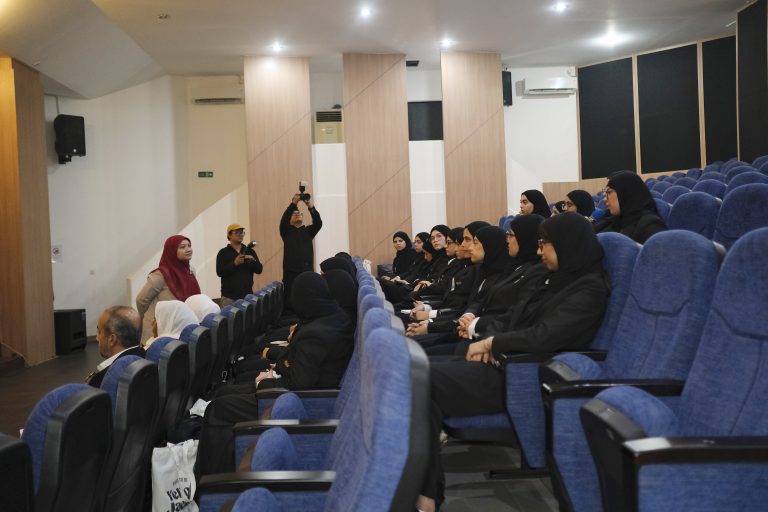
In Biology, participants gained insights into tropical forest ecosystems and efforts to promote their sustainability through a session titled “Tropical Forest and the Pursuit of Sustainability,” delivered by Dr. Noviar Andayani, M.Sc. The session introduced the characteristics of tropical forests, the importance of biodiversity, and various challenges in maintaining the sustainability of forest ecosystems.
The learning experience extended beyond the classroom. Participants also took part in learning activities and practical sessions within the FMIPA UI environment, including an industrial visit to observe the application of science in professional settings. This approach provided participants with an opportunity to connect the concepts they learned with real-world challenges and applications.
Multidisciplinary learning was an integral part of the program. Participants attended sessions at the FMIPA UI Multidisciplinary Building and developed a Capstone Innovation Project that encouraged them to formulate solutions to contemporary scientific challenges. Through this approach, students were not only recipients of knowledge but were also encouraged to develop critical thinking skills, work collaboratively in teams, and generate science-based ideas.
The field experience further enriched participants’ learning through the Biodiversity Exploration module. Organized by the Department of Biology, FMIPA UI, the activity invited participants to explore biodiversity at the UI Urban Forest and Situ Kenanga Lake under the guidance of academics, including Dr. Riani Widiarti, M.Si., and Dr. Afiatry Putrika.
Participants were divided into three scientific mission groups. The plant exploration group identified mosses, ferns, gymnosperms, and angiosperms while observing tropical vegetation. The wildlife group studied urban birds and insects through observations of morphology, sound recording, and behavior. Meanwhile, the microalgae group collected plankton samples from Situ Kenanga, measured water quality, and observed microalgae under a microscope.
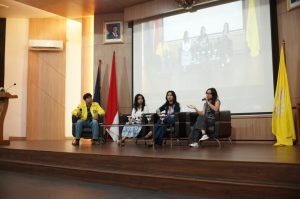
In addition to academic activities, participants were introduced to the Universitas Indonesia campus through a campus tour accompanied by UI BEM and Student Ambassadors. The program began with a session titled “Science Leadership: Future Global Challenges and the Role of Young Scientists,” delivered by Astari Dwiranti, Ph.D., which served as an introduction for participants to understand the challenges facing the next generation of scientists.
All of these experiences were brought together through the Capstone Innovation Project. At the final stage of the program, participants presented their ideas and proposed solutions before an FMIPA UI academic panel on August 13, 2026. The series of activities then concluded with a closing ceremony and an awards presentation.
Prof. Anom expressed hope that the collaboration would extend beyond the summer school program and develop into broader academic cooperation.
“We hope this program will strengthen FMIPA UI’s international network and open up opportunities for broader collaboration in education and research,” said Prof. Anom.