
|
Depok, March 27, 2026 – Climate change and increasingly frequent weather anomalies pose a major challenge for Indonesia’s traditional tempe small and medium enterprises (SMEs). Fermentation failures caused by unstable temperature and humidity often result in economic losses while eroding consumer confidence in the taste of Indonesian tempe.
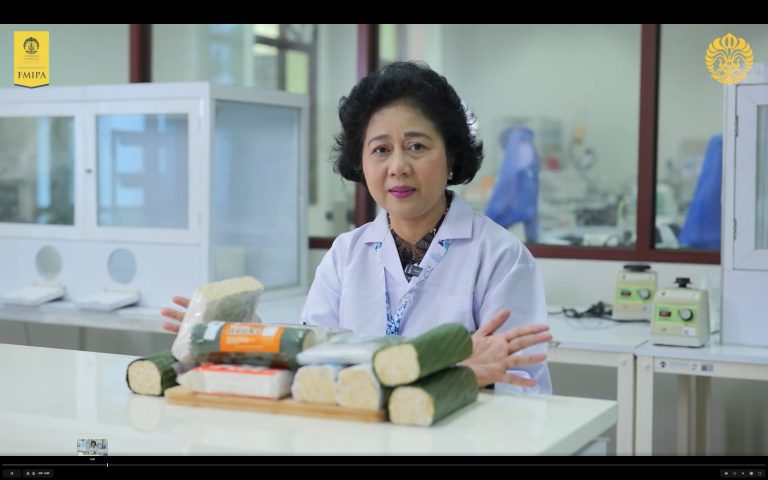
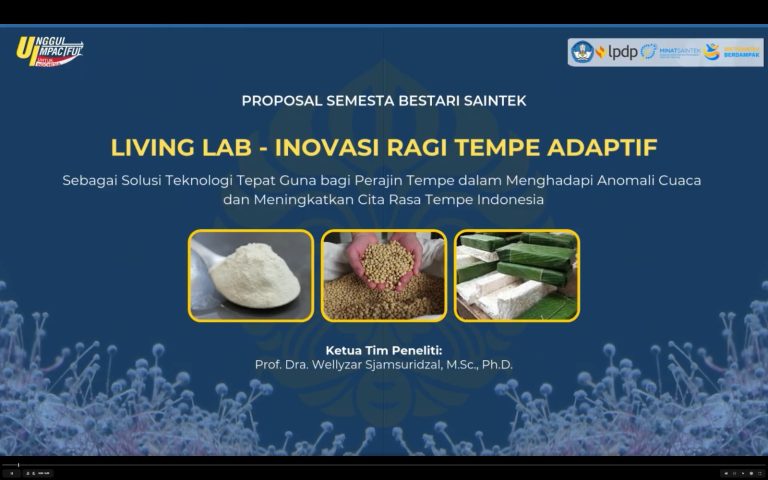
Addressing this challenge, a research team from the Faculty of Mathematics and Natural Sciences (FMIPA) at Universitas Indonesia (UI), led by Prof. Dra. Wellyzar Sjamsuridzal, M.Sc., Ph.D., Professor of Systematics and Microorganism Prospection, has introduced the Adaptive Tempe Yeast innovation through the Living Ecosystem Program (Living Lab) Based on Science and Technology – Bestari Saintek.
Living Lab Bestari Saintek, launched in November 2025, is a research funding program from the Directorate of Science and Technology Dissemination and Utilization (Minat Saintek), Ministry of Higher Education, Science, and Technology (Kemdiktisaintek), in collaboration with the Indonesia Endowment Fund for Education (LPDP).
The effort to create a science ecosystem through Bestari Saintek is realized as a tangible collaboration between universities, industry players, micro, small, and medium enterprises (MSMEs), and community groups, through the concept of a living laboratory (living lab). The resulting innovations are expected to be appropriate and provide direct economic impact, ranging from improving the quality of local products, increasing supply chain efficiency, to expanding market access.
Speaking to the FMIPA UI Public Relations team, Prof. Wellyzar explained that this innovation is not merely about technology, but also about how he and his team strive to preserve Indonesia’s culinary heritage, empower local tempe artisans, and open global market opportunities for Indonesian tempe. With the introduction of this adaptive yeast, the quality of Indonesian tempe can be maintained year-round, no longer dependent on weather conditions.
The challenge faced by tempe artisans is their reliance on commercial yeast that is not adaptive, leading to a significant decline in the sensory quality of tempe. Therefore, an innovation is needed that not only provides a solution for artisans in the era of climate change but also restores the traditional flavor of tempe.
“We want to ensure that Indonesia’s centuries-old culinary heritage, tempe, can continue to be produced at the highest quality, unaffected by climate change or weather anomalies. The expected outcome is a new generation of tempe yeast that is adaptive to climate variations, minimizes the risk of fermentation failure, and produces tempe with improved flavor,” said Prof. Welly.
For tempe artisans, weather uncertainty often poses a significant risk that leads to losses. Some artisans shared their experiences.
“If the raw material prices are already high and the tempe fermentation fails, that’s it—we’re done (we incur a loss),” said Edi.
Meanwhile, Wastono added, “Imagine if the loss amounts to twice the initial capital—who would bear that?”
This situation demonstrates that the new-generation tempe yeast innovation is not merely a necessity, but an urgent measure to save Indonesia’s tempe SMEs and preserve the nation’s culinary heritage.
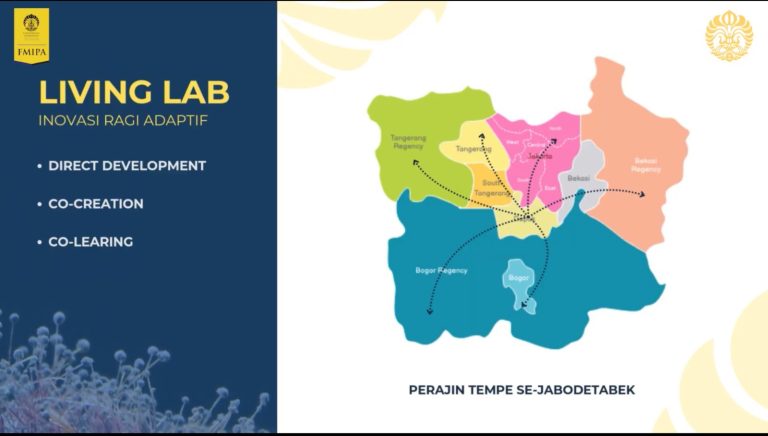
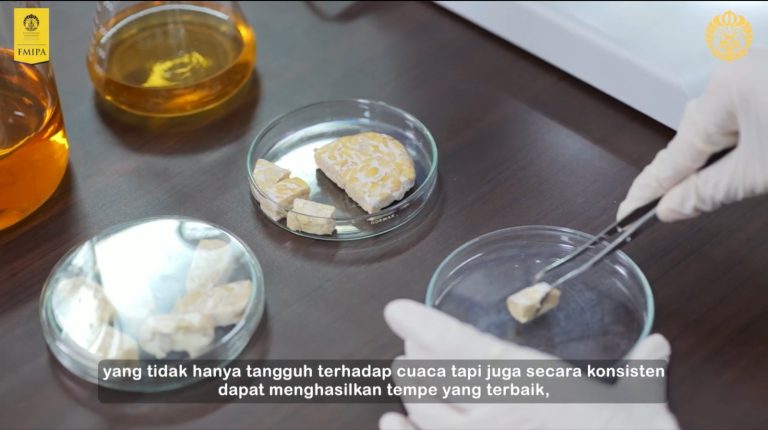
This new-generation yeast is developed from a collection of molds Rhizopus at the Universitas Indonesia Culture Collection (UICC) in the CoE IBR-GS FMIPA UI, which houses the most complete collection of tempe molds in Indonesia. By combining the strengths of various strains Rhizopus, this yeast is not only resilient to weather changes but also capable of producing tempe with a distinctive aroma, thick white hyphae, and a perfectly firm texture.
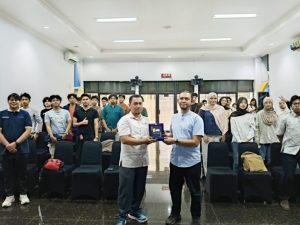
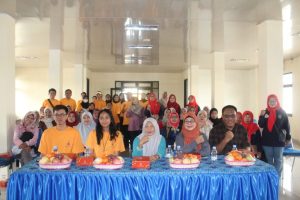
The strength of this project lies in its approach Co-Creation and Co-Learning of collaborating directly with tempe artisans in the Jabodetabek area. The research was conducted on-site, allowing the yeast formula to be tailored to the actual needs of the artisans. The project quadruple helix involves elements of government, academia, industry, and tempe SMEs, creating a sustainable synergy.
Ir. Hairudin Ali, from PT. FKS Multiagro TBK, expressed his support as a key partner in this project. According to him, FMIPA UI is the right research partner because it has a lineup of highly skilled experts, including Prof. Wellyzar with a collection of Rhizopus the most comprehensive collection in Indonesia.
“This collection is crucial for preserving Indonesia’s biodiversity while also creating opportunities to develop new tempe flavors and revive various traditional tempe tastes from across the archipelago, such as Tempe Bandung, Tempe Malang, and Tempe Purwokerto,” said Hairudin.
He added that an industrial-scale production facility in Sentul has been established to consistently produce high-quality tempe yeast, supporting FMIPA UI’s Adaptive Tempe Yeast innovation while also creating opportunities for local and export markets.
“This tempe yeast factory facility is scheduled to begin operations in mid-June 2026, and will utilize the results of the innovation Living Lab to produce high-quality tempe,” he added.
The long-term impact of this innovation is expected to include improved food security and product quality, as tempe production can remain stable and the flavor consistently excellent. In addition, this innovation supports the economic empowerment of tempe SMEs by enabling more stable production, increased income, and access to new markets, including e-commerce premium supermarkets and retail markets.
Export prospects are also wide open, as the adaptive tempe yeast allows for consistent production of high-quality Indonesian tempe year-round in various countries, simultaneously promoting Indonesian cuisine on the global stage.
“With adaptive yeast, producers in Europe, North America, or East Asia can offer authentic Indonesian tempe year-round, without being dependent on the seasons. This opens up global markets and introduces our culinary heritage,” said Prof. Welly.
The project involves FMIPA UI researchers, including Dr. Fitrianingsih, S.Si., M.Eng., Dr. Mazytha K. Rachmania, M.Si., Dra. Sitaresmi, M.Sc., Dhian Chitra Ayu Fitria Sari, M.Si., and Adisty Pratiwi Sulistinawati, S.Si. The project is supported by the main partner, PT FKS Multi Agro, Tbk., as well as supporting partners, namely Koperasi Tempe Unggul Prima and tempe SMEs in the Jabodetabek area.
Through this innovation, Prof. Wellyzar urged all researchers at Universitas Indonesia to support and collaborate in fostering a sustainable future for Indonesia’s tempe industry and in making Indonesian tempe known worldwide.