
|
FMIPA UI Professor Promotes Research on Indonesian Indigenous Yeasts, from Biodiversity to Food Innovation
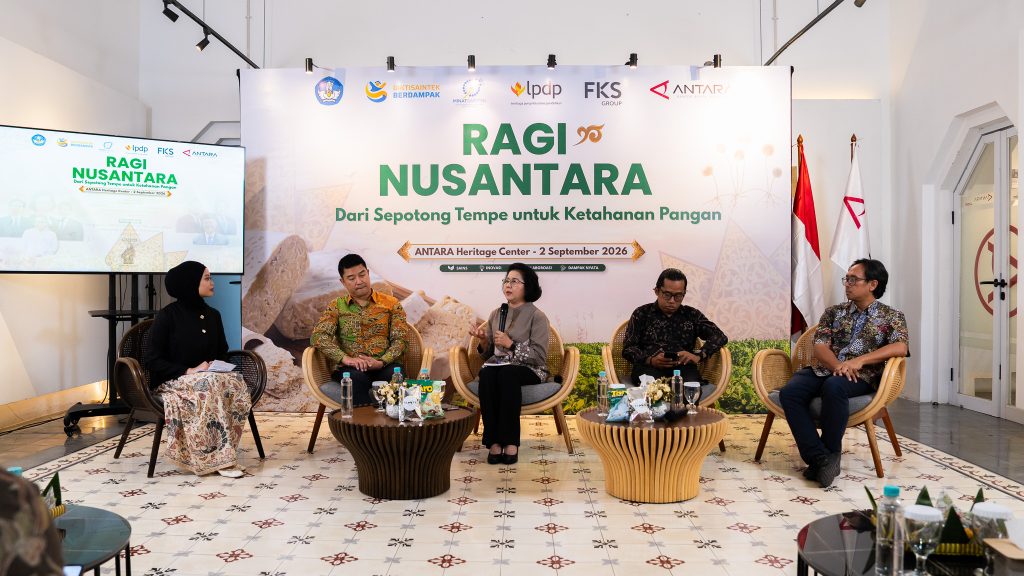
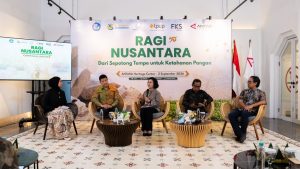
Depok, September 16, 2026 — Efforts to restore the diversity of Indonesian tempeh varieties continue through tempeh starter culture research led by Prof. Wellyzar Sjamsuridzal and her team from PUIPT CoE IBR-GS / the Department of Biology, Faculty of Mathematics and Natural Sciences, Universitas Indonesia (FMIPA UI). Most recently, Prof. Wellyzar expanded the discussion and public outreach of this research to the public and stakeholders through a discussion titled “Ragi Nusantara: Dari Sepotong Tempe untuk Ketahanan Pangan” at the ANTARA Heritage Building in Central Jakarta on Wednesday (September 2, 2026).
Prof. Wellyzar’s participation in the forum was part of an effort to broaden the dissemination of research findings to the public while bringing research closer to stakeholders who can support its further development through a quadruple helix collaboration. Thus, research on tempeh starter cultures is not only about microorganisms and fermentation processes, but also about preserving the rich culinary heritage of Indonesian tempeh while opening opportunities for its development as a food innovation.
At the forum, Prof. Wellyzar once again explained the importance of microbial diversity in determining the characteristics and flavor of tempeh. In the past, when traditional starter cultures were used to make tempeh, its flavor varied from region to region, with varieties such as Malang tempeh, Bandung tempeh, Purwokerto tempeh, and others. However, since the widespread commercialization of tempeh starter cultures in Indonesia in the early 2000s, the flavor of tempeh has become more uniform across regions, accompanied by a decline in the diversity of tempeh-associated Rhizopus species (diversity lost). This is because commercial tempeh starter cultures use only a single Rhizopus, whereas traditional starter cultures involve a diverse range of Rhizopusspecies,” said Prof. Wellyzar.
According to Prof. Wellyzar, the decline in Rhizopus diversity in tempeh starter cultures has also affected the flavor of tempeh available today. Indonesia is rich in biodiversity, not only in its raw ingredients and wrapping materials, but also in the various types of tempeh starter cultures used.
Her research with the team explores various Rhizopus species to develop innovative tempeh starter cultures that can address fermentation failures and restore the lost diversity of characteristics and flavors found in Indonesian tempeh.
The research is part of a study titled “Adaptive Tempeh Starter Culture Innovation as an Appropriate Technology Solution for Tempeh Producers to Address Weather Anomalies and Enhance the Flavor of Indonesian Tempeh.” The research is designed not only to enrich starter culture diversity but also to develop starter cultures that can adapt to environmental conditions, thereby helping stabilize tempeh production among small and medium-sized tempeh producers.
The importance of developing tempeh-based innovations was also highlighted by Deputy Minister of Higher Education, Science, and Technology Prof. Dr. Fauzan, M.Pd. “Tempeh has the potential to be developed as a strategic commodity to support food security, while tempeh-based product innovation in Indonesia remains limited. Innovation in the tempeh sector is still relatively limited in terms of variety, with products such as tempeh chips and botok being among the most common,” said Fauzan.
From the perspective of science and technology development, Director of Science and Technology Dissemination and Utilization at the Ministry of Higher Education, Science, and Technology, Prof. Dr. Eng. Yudi Darma, said that tempeh starter culture research utilizing Indonesia’s native Rhizopus fungi is not only related to the development of biological technology but also addresses challenges faced by tempeh producers.
The dissemination event at the ANTARA Heritage Building provided a further opportunity for Prof. Wellyzar to introduce the progress of this research to a broader audience. While the research was previously developed within the context of research and appropriate technology development, this forum brought together its scientific aspects with discussions on biodiversity, food security, culinary heritage, and opportunities to scale up the research outcomes for industrial applications.
“Ragi Nusantara” also brought together FMIPA UI researchers with industry partner FKS Multi Agro and the Indonesia Endowment Fund for Education (LPDP), which supports research funding. The involvement of these stakeholders marks an important development in the research journey, as the research findings are beginning to be directed toward further development and potential commercialization.
Director General of Science and Technology, Prof. Ahmad Najib Burhani, said that Indonesia’s microbial wealth is part of the nation’s biodiversity that needs to be protected as part of efforts to strengthen food security. Tempeh starter cultures need to be protected as an asset of Indonesia’s biological sovereignty to prevent genetic resource theft (biopiracy), ensuring that this cultural heritage can be utilized as widely as possible by Indonesian communities without external barriers. The collaboration between Universitas Indonesia and FKS Group also provides researchers with an opportunity to gain first-hand understanding of challenges in the field. “Innovation cannot have a meaningful impact without the support of a healthy industrial ecosystem,” said Ahmad Najib.
Wellyzar and her team’s research is one of the studies funded through the 2026 Science and Technology-Based Living Lab Program (Bestari Saintek), supported by LPDP funding. Meanwhile, as the primary industry partner, PT FKS Multi Agro, Tbk. provides funding support to facilitate the scale up process and field trials of the research outcomes with small and medium-sized tempeh producers. At the time of the dissemination event, the research had entered its fourth month of a one-year funding period.
Dhani Setyawan, Head of the LPDP Research Distribution Division, said that industry involvement in research development is essential to ensure that research outcomes from higher education institutions can be further developed and utilized more widely.
“We want to encourage the development of a mechanism through which industry can contribute to research funding. If we can establish a research funding scheme that aligns with industry needs, LPDP can provide additional funding,” said Dhani.
This support creates an opportunity for FMIPA UI research outcomes to move beyond the research and development stage and continue through joint product development with industry partners.
Yanuar Samron, VP Commercial of FKS Group, said that tempeh holds a strategic position because it has long been an integral part of Indonesian people’s daily lives and cultural heritage.
“Tempeh is an iconic part of Indonesian culture and is deeply rooted in our society. That is why we need to work together to make it one of the pillars of the nation,” said Yanuar.
Benny Siga Butarbutar, President Director of Perum LKBN ANTARA, said that discussions on food security are also part of the media’s role in addressing the nation’s strategic issues.
“For us at ANTARA, food security is not merely an economic or agricultural issue. It is a strategic national issue that must continue to be supported through accurate, balanced, and informative reporting,” said Benny.
Through the development of starter cultures that utilize the diversity of native Indonesian Rhizopus species, the research aims to preserve tempeh diversity while addressing production challenges amid changing environmental conditions. This development demonstrates that Indonesia’s rich biodiversity can serve as a source of food innovation that is not only scientifically valuable but can also benefit communities and industry.
Post Views: 21
Share this:
Facebook
X
LinkedIn
WhatsApp
Email
Tumblr
Telegram
Print
Other News