
|
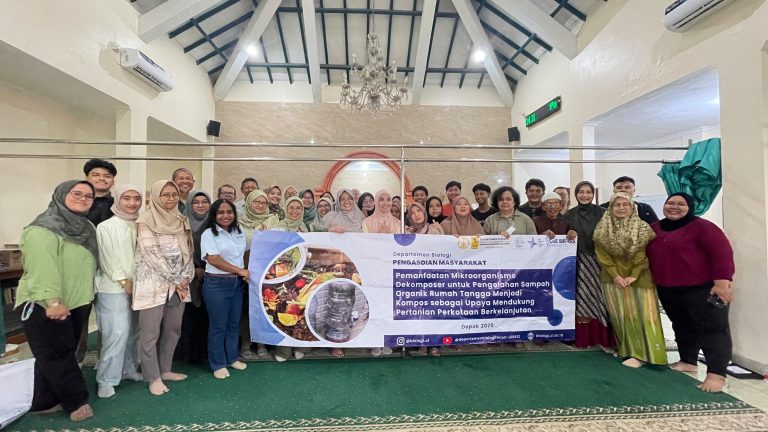
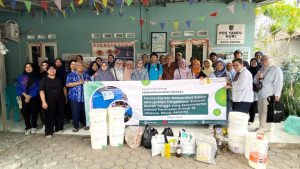
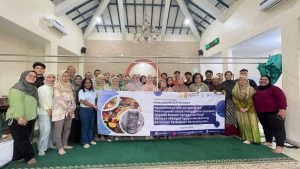
Depok, October 7, 2026 — Household waste management, particularly organic waste, remains a key concern for the Depok City Government. In response to this issue, the Faculty of Mathematics and Natural Sciences, Universitas Indonesia (FMIPA UI), through its Department of Biology, encouraged residents of RW 12, Pancoran Mas Subdistrict, Depok, to turn household organic waste into compost using decomposer microorganisms. The activity was held on Saturday, September 19, 2026, as part of a community service program entitled “Utilizing Decomposer Microorganisms to Process Household Organic Waste into Compost to Support Sustainable Urban Agriculture.”
Led by Dra. Sitaresmi, M.Sc., the initiative was part of the program “Development of an Integrated Organic Waste Management System Based on Maggot Houses and Portable Digesters,” supported by a collaborative research grant between Universitas Indonesia and the Depok City Government. Through this initiative, the Department of Biology at FMIPA UI contributed to the city's efforts to increase active community participation in household waste management while promoting sustainable urban agriculture.
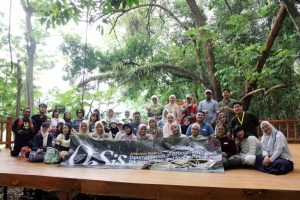
The activity featured Dr. rer. nat. Yasman, Dr. Dra. Ratna Yuniati, M.Si., and Dra. Sitaresmi, M.Sc., lecturers from the Department of Biology, as speakers. They emphasized the importance of household waste management in maintaining environmental quality while reducing the burden on temporary waste collection sites (Tempat Penampungan Sementara or TPS) and final waste processing facilities (Tempat Pemrosesan Akhir or TPA) in Depok. Active community participation is essential to these efforts, particularly in processing household organic waste into useful products and reducing the amount of waste sent to disposal facilities.
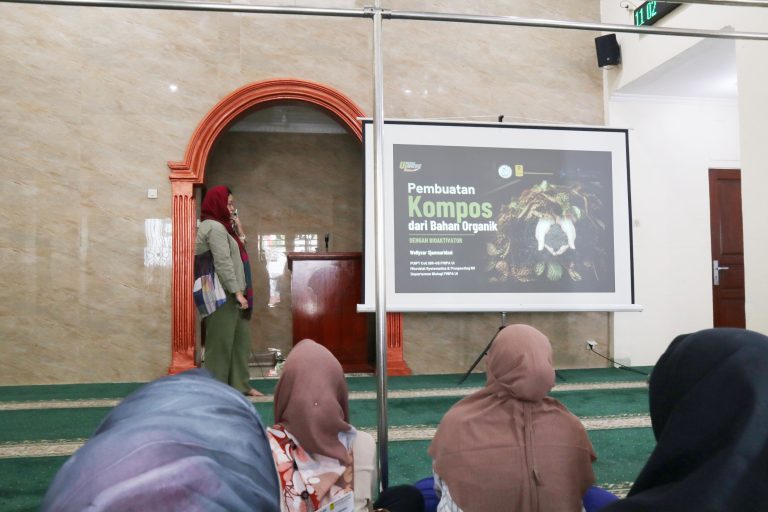
One of the methods introduced by the team wascomposting. Compost is a humus-like material produced through controlled decomposition, in which organic matter is broken down under managed conditions that allow microorganisms, such as bacteria and fungi, to function optimally and transform organic materials into nutrients that plant roots can readily absorb.
In nature, microorganisms act as decomposers, breaking down organic matter. This same principle is applied in compost production. According to Sitaresmi, although compost is commercially available, residents can also produce it themselves by utilizing organic waste generated in their households.
“Compost fertilizer is not only available as a commercially sold product but can also be made at home using the organic waste generated in our daily lives. In this way, household waste can be transformed into something useful,” Sitaresmi explained.
During the practical demonstration, the team showed how to make compost by adding a bioactivator to household organic waste placed in a composting bucket. The addition of a bioactivator can shorten the composting process from the usual two to three months to approximately 40 days. The demonstration was met with enthusiasm, as residents actively asked questions about the composting process, reflecting their interest in independently managing organic waste at home.
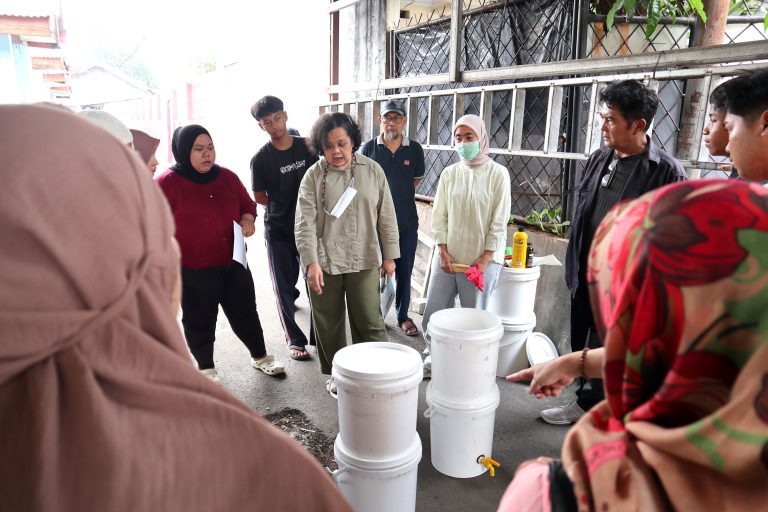
To encourage residents to process organic waste independently, the Department of Biology at FMIPA UI provided three sets of stackable composting buckets to the community of RW 12, Pancoran Mas Subdistrict, Depok. These facilities are expected to support composting as part of sustainable household waste management while creating potential economic opportunities through the sale of the resulting compost.
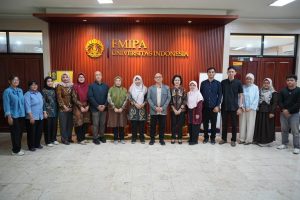
The Head of the Department of Biology at FMIPA UI, Dr. Windri Handayani, explained that the activity aimed to educate the community on various ways to utilize household organic waste, including composting, biodigesters, and maggot cultivation. These efforts are expected to promote the concept of circular economy, enabling communities to manage waste independently and transform it into products with practical and economic value.
Through this initiative, the Department of Biology at FMIPA UI applied scientific knowledge, particularly the role of decomposer microorganisms, to address household waste management challenges. Going forward, the program is expected to encourage more residents to process organic waste consistently, making composting a sustainable habit that not only protects the environment but also supports the development of urban agriculture in residential areas.