
|
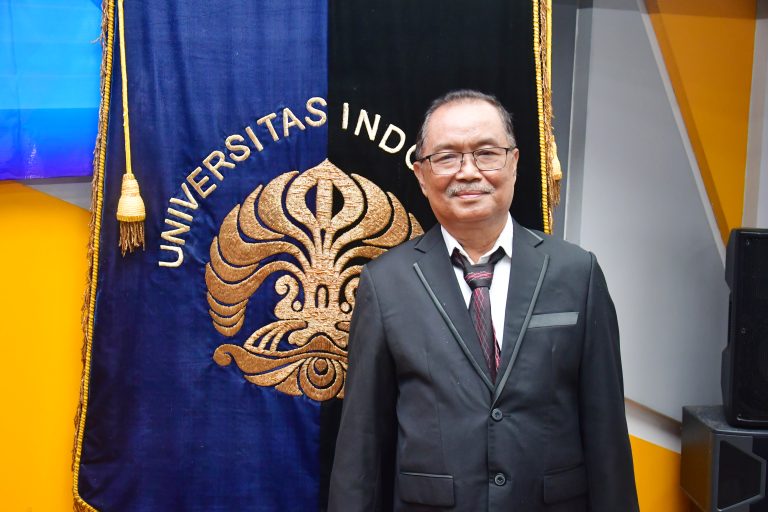
Depok, October 2, 2026 — The need for fuel with higher uranium content is one of the challenges in developing research reactors that use low-enriched uranium. To address this need, Masrukan, a doctoral graduate of the Faculty of Mathematics and Natural Sciences, Universitas Indonesia (FMIPA UI), researched uranium-, zirconium-, and niobium-based materials with potential for development as research reactor fuel.
The research focused on identifying materials capable of accommodating higher amounts of uranium while remaining stable during operation and resistant to corrosion. These three characteristics are essential for materials to meet the requirements for nuclear fuel candidates.
One of the research reactor fuel materials currently in use is a uranium-silicon and aluminum alloy. This material can accommodate approximately 4.8 grams of uranium per cubic centimeter, while the development of high-density fuel refers to a requirement of more than 8 grams of uranium per cubic centimeter.
Masrukan tested uranium and zirconium mixtures with different levels of niobium addition, namely 0, 1, 4, and 7 weight percent. The addition of niobium was studied to determine its effects on the material’s composition, density, hardness, and corrosion resistance.
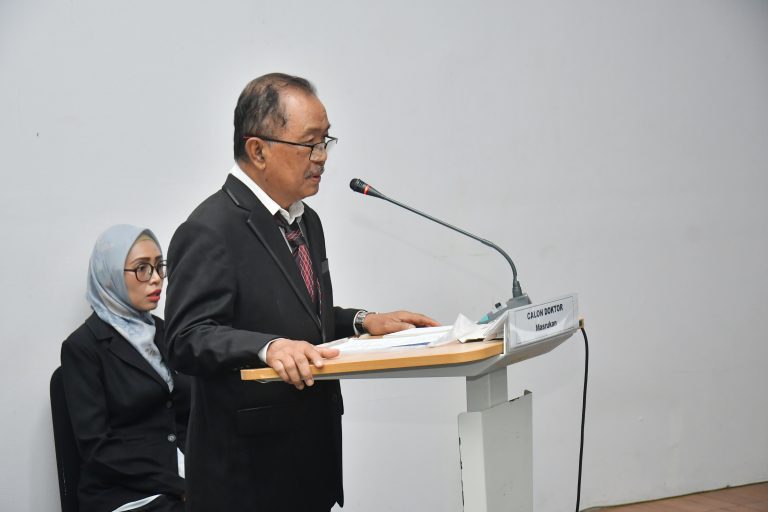
“This research focused on obtaining data on the characteristics of materials with a combination of properties suitable for research reactor fuel candidates. Among the compositions tested, the addition of 4 weight percent niobium demonstrated a good balance in terms of stability, strength, and corrosion resistance,” said Masrukan.
To determine the characteristics of each composition, the materials were melted and subsequently subjected to physical and mechanical testing, as well as microstructural analysis. Corrosion tests were also conducted under different environmental conditions to assess the material’s resistance when exposed to water and oxygen.
The results showed that the addition of niobium could help maintain the stability of the material’s structure. However, a higher niobium content did not necessarily produce a better combination of properties across all aspects tested.
The material containing 4 weight percent niobium demonstrated the best balance among the compositions studied. It had high density, adequate hardness, a relatively uniform structure, and a low and consistent corrosion rate.
Meanwhile, the addition of 7 weight percent niobium resulted in better stability and corrosion resistance. However, this composition had lower density and hardness and exhibited a more complex microstructure in certain areas.
These findings demonstrate that the development of fuel materials cannot rely on a single characteristic. A material must meet multiple requirements simultaneously before it can be further developed as a research reactor fuel candidate.
“These results do not mean that the material is ready for use as reactor fuel. Various further tests are still required to verify its performance and safety, particularly under reactor operating conditions,” said Masrukan.
The development of fuel materials is related to efforts to utilize low-enriched uranium (LEU) in research reactors. The use of this type of uranium requires fuel materials with sufficient uranium content to maintain reactor performance. In Indonesia, one of the facilities that uses research reactor fuel is the G.A. Siwabessy Multipurpose Reactor in Serpong.
Masrukan’s research provides initial data on the effects of niobium addition on the characteristics of uranium-based materials. The findings can serve as a reference for further research into the development of nuclear fuel. Nevertheless, the material still requires additional testing before it can be considered for use in research reactors.
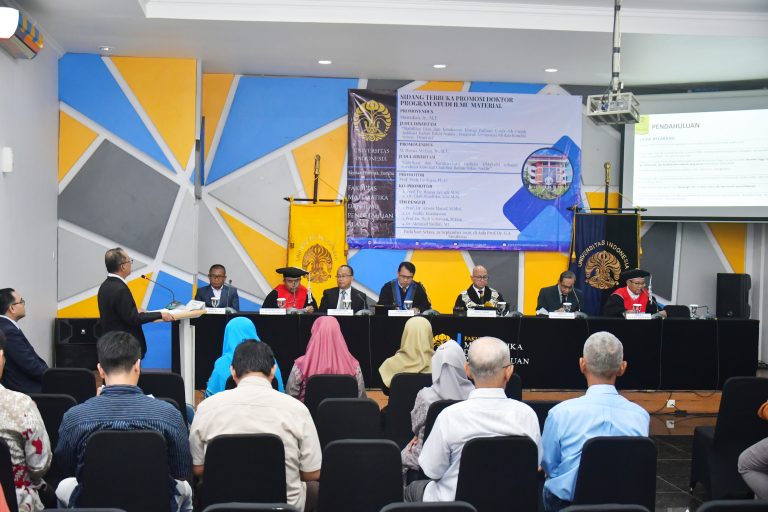
Masrukan presented his research entitled “Phase Stability and Corrosion Resistance of U−6Zr−xNb Alloys for Nuclear Fuel Applications: Effects of Nb Composition and Aerated-Deaerated Conditions” as part of the Doctoral Promotion Examination in the Materials Science Study Program at FMIPA UI. The examination was held at the Prof. G.A. Siwabessy Hall, FMIPA UI, Depok, on Tuesday, September 29, 2026.
He completed his doctoral studies in six semesters with a GPA of 3.85 and graduated cum laude. The doctoral promotion examination was chaired by the Head of the Examination Committee, who is also Dean of FMIPA UI, Prof. Dr. Tito Latif Indra, M.Si.
The research was supervised by Promoter Prof. Dede Djuhana, M.Si., Ph.D., and Co-Promoters Dr. Djati Handoko, M.Si., from the Department of Physics, FMIPA UI, and Prof. Dr. Wisnu Ari Adi, M.Si., from the Advanced Materials Research Center, National Research and Innovation Agency (BRIN).