
|
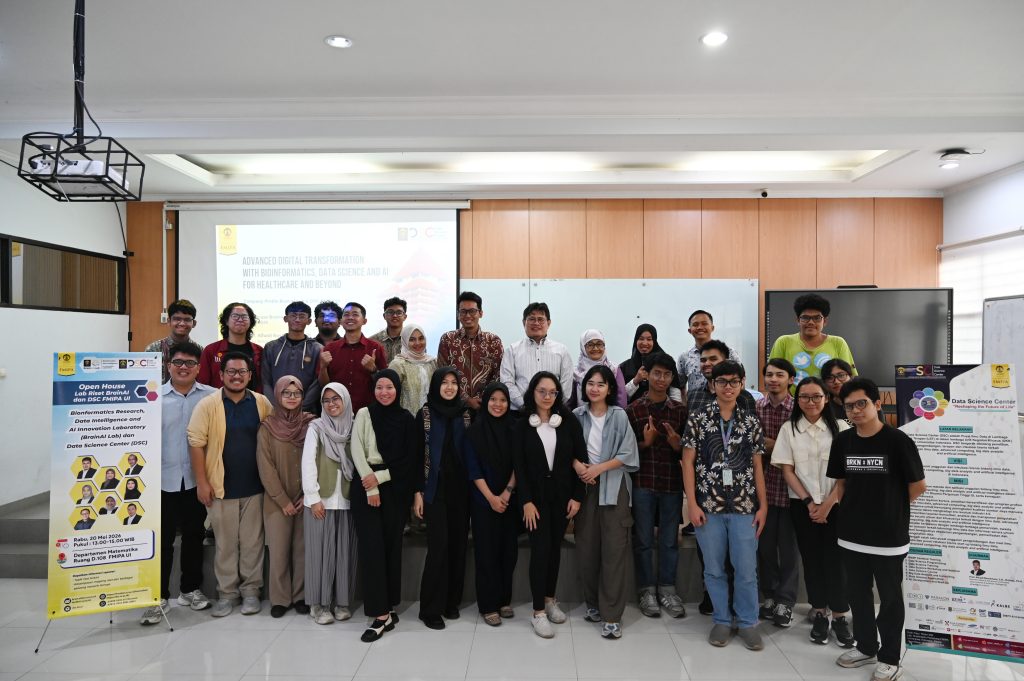
The Faculty of Mathematics and Natural Sciences (FMIPA) at the University of Indonesia (UI), through the BrainAI Lab and Data Science Center (DSC), held an Open House event on Wednesday (20/5/2026) at Room D108, Building D, Department of Mathematics, FMIPA UI, UI Campus, Depok. The event served as an initiative to introduce the research environment while also opening opportunities for students to develop competencies in Artificial Intelligence (AI) and Data Science, two sectors that are currently national development priorities in facing digital transformation.
The event was attended by students from various study programs within the Department of Mathematics, FMIPA UI. The high level of enthusiasm shown by participants reflects the growing interest among younger generations in mastering data- and AI-based technologies, which are increasingly considered essential across industries, healthcare, education, and government sectors.
Amid the rapid pace of national digital transformation, the demand for Indonesia’s digital talent continues to grow. Strengthening students’ capacities in the fields of AI and data science is considered a strategic step to enhance Indonesia’s competitiveness in the digital economy era, while also addressing the need for human resources that are adaptive to technological advancements.
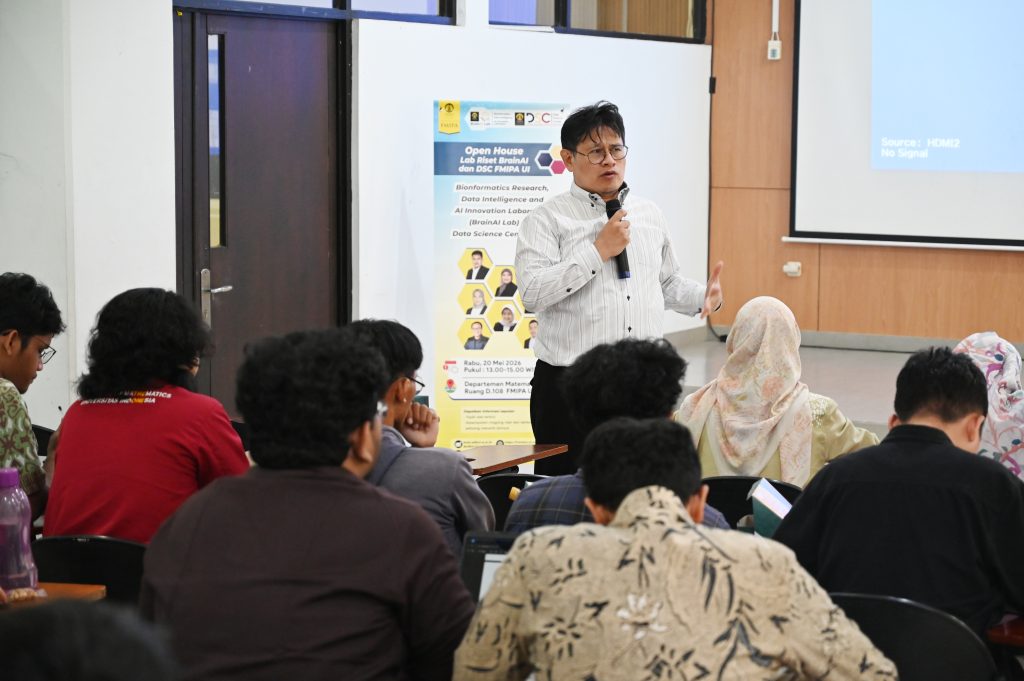
Head of BrainAI Lab and DSC UI, Alhadi Bustamam, Ph.D., stated that universities play an important role in developing research and innovation ecosystems capable of addressing global technology-based challenges.
“Artificial intelligence and data science are no longer merely trends, but have become necessities across various sectors. Therefore, universities need to provide learning and research spaces that connect students with real-world problems and the latest technologies,” said Alhadi Bustamam in his remarks.
He explained that the BrainAI Lab and DSC UI not only focus on technology development, but also foster a collaborative culture among students, lecturers, and researchers.
“We want students not only to become technology users, but also to become innovators and researchers who can create AI- and data science-based solutions for society,” he said.
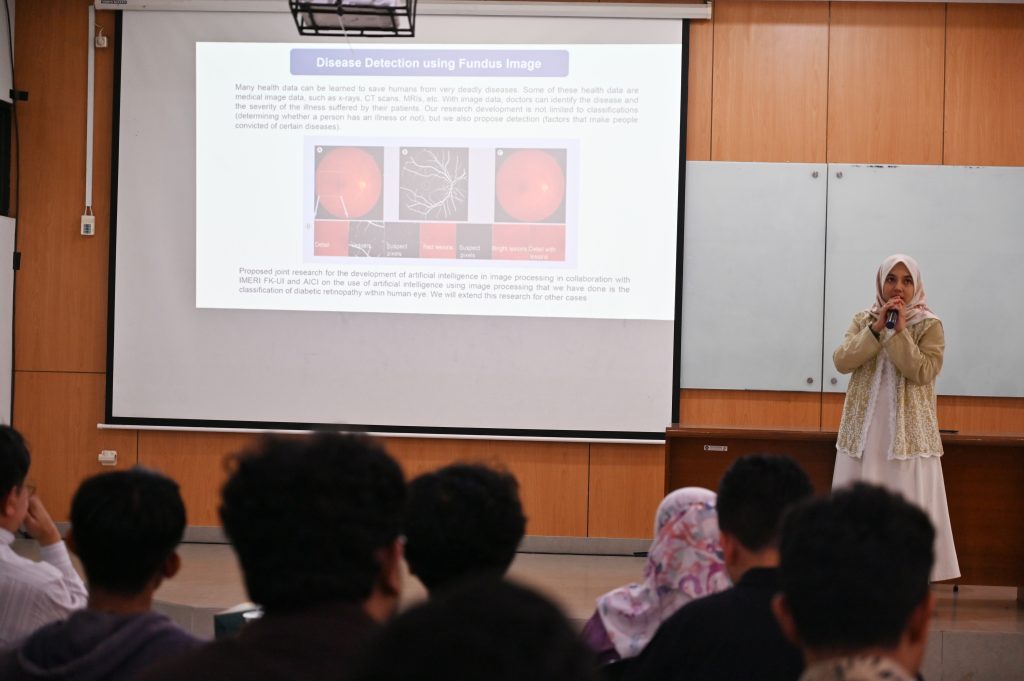
During the main session, Devvi Sarwinda, S.Si., M.Kom. presented several research topics currently being developed at the BrainAI Lab, ranging from bioinformatics and machine learning to the development of computational AI-based models.
According to Devvi, involving students in research from an early stage is an important aspect of building both academic and professional competencies.
“Students need to gain direct experience in the research process because through it, they learn how to solve problems, work in teams, and understand how technology is developed in real-world settings,” she said.
She also introduced research internship opportunities available for students to participate in various research projects at the BrainAI Lab.
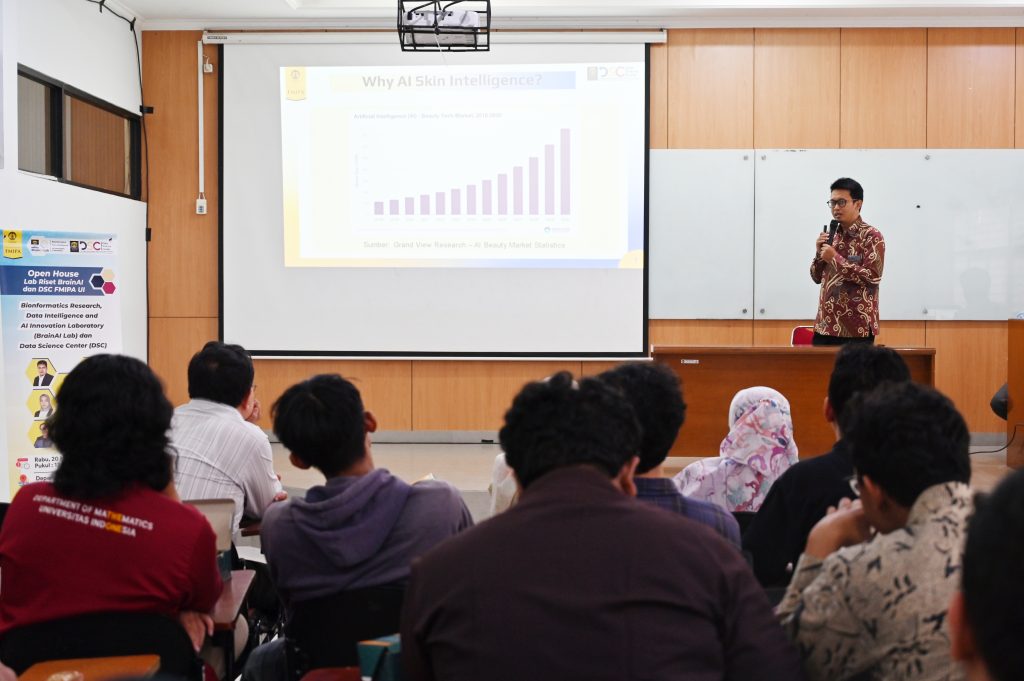
Meanwhile, Haryo Nugroho, M.Si. explained various activities and research focuses at DSC UI, including the implementation of data science and AI in developing cross-disciplinary innovations.
“The application of data science today is extremely broad, ranging from the healthcare, education, and business sectors to public policy. Therefore, the ability to process and analyze data has become an essential competency that students need to possess,” said Haryo.
The question-and-answer session was highly interactive, with participants actively raising questions regarding research mechanisms, organizational experiences, competency development opportunities, and the internship selection process. The discussion reflected the strong interest among students in becoming directly involved in the research and technological innovation ecosystem within the university environment.
Through this Open House, the BrainAI Lab and DSC UI not only introduced their work programs and research activities, but also created opportunities for collaboration and encouraged students to take an active role in the development of technology and research relevant to national needs.