|
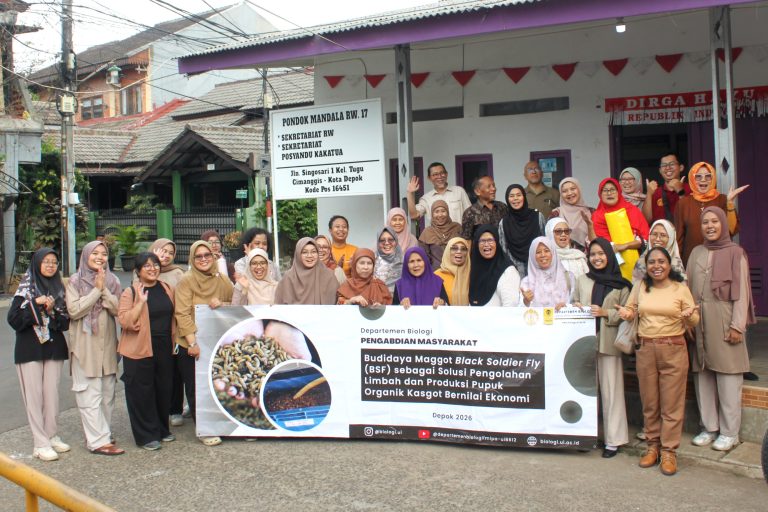
Depok, October 19, 2026 – Household organic waste does not always have to end up in landfills. Food scraps and vegetable waste, when properly managed, can be converted into livestock feed, organic fertilizer, and even alternative energy. Through a community service program in RW 17, Tugu Subdistrict, Depok, the Faculty of Mathematics and Natural Sciences, Universitas Indonesia (FMIPA UI), through a team from its Department of Biology, introduced residents to the cultivation of Black Soldier Fly (BSF) maggots as a way to transform organic waste into valuable resources while creating economic opportunities for the community.
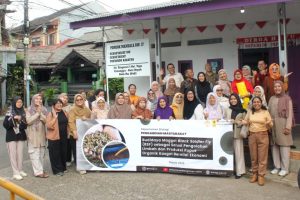
The program, entitled “Black Soldier Fly (BSF) Maggot Cultivation as a Solution for Waste Management and the Production of Economically Valuable Organic Fertilizer from Maggot Residue (Kasgot),” was held on Saturday, September 26, 2026. Led by Fadhillah, S.Si., M.Agri., Ph.D., the activity involved lecturers, students, and educational staff from the Department of Biology, FMIPA UI, and was supported by an FMIPA UI Community Service Grant.
Through this initiative, the Department of Biology, FMIPA UI, also supported the efforts of the Depok City Government and the Depok City Office of the Ministry of Environment and Forestry (KLHK) to increase community participation in household waste management. Beyond simply reducing waste, the program encouraged residents to recognize that everyday food scraps and organic waste can still be processed into useful products.
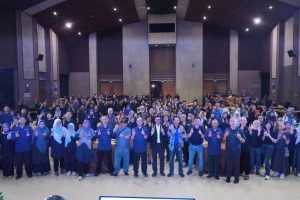
The activity began with remarks from the Head of the Department of Biology, FMIPA UI, Dr. Windri Handayani, followed by remarks from the Vice Dean for Education, Research, and Student Affairs, FMIPA UI, Prof. Anom Bowolaksono, Ph.D. Approximately 20 residents representing several neighborhood units (RTs) within RW 17, Tugu Subdistrict, Depok, attended the event, including the Head of RW 17, drg. Novarita.
During the presentation and discussion sessions, Department of Biology, FMIPA UI lecturers Dr. rer. nat. Yasman, M.Sc., and Dr. Dian Hendrayanti introduced residents to more environmentally friendly approaches to household waste management. The topics covered included the application of the 3R principles (Reduce, Reuse, Recycle) and the use of decomposer microorganisms to process organic waste into compost. Participants were encouraged to understand that food scraps and kitchen waste do not have to end up as discarded waste. With proper management, organic waste can be processed into useful products that benefit the environment.
For residents of RW 17, Tugu Subdistrict, waste management efforts had already begun through household waste sorting and the establishment of a waste bank in the residential area. However, organic waste separated from other waste streams still has considerable potential for further processing, rather than simply becoming residue that must be discarded. This is where biological waste treatment becomes relevant. Organic waste can be processed through microbial decomposition and converted into compost.
The program leader, Fadhillah, S.Si., M.Agri., Ph.D., explained that household organic waste still has considerable potential for further use rather than simply being thrown away. With appropriate processing methods, waste can be transformed into products that benefit the community.
“Organic waste generated in our daily lives can still be put to good use. In addition to being processed into compost, food scraps can also serve as feed for BSF maggots, while organic waste can potentially produce biogas through a biodigester. There are various ways to process waste and make it more useful, depending on the conditions and needs of the community,” Fadhillah explained.
An explanation of Black Soldier Fly (BSF) maggot cultivation as a solution for waste management and organic fertilizer production within a circular economy framework was delivered by Prof. Dr. rer. nat. Mufti Petala Patria, M.Sc., Professor at the Department of Biology, FMIPA UI. In his presentation, he explained that maggots are the larvae of the Black Soldier Fly (Hermetia illucens), which can consume various suitable organic materials, including certain types of sorted food waste. Through properly managed cultivation, these organic materials can be converted into larval biomass, or maggots, which have the potential to be used as livestock feed, including poultry feed, due to their protein and fat content.
The economic potential of BSF cultivation extends beyond the maggots themselves. The process also produces kasgot, the residual material left after larval rearing, which can potentially be used as organic fertilizer after appropriate processing and maturation to support plant growth. Thus, household organic waste can not only be reduced but also converted into useful products. Maggots can potentially serve as a feed product, while kasgot can support agricultural activities and greening initiatives.
In addition to maggot cultivation, residents were introduced to biodigesters, a technology that uses microorganisms operating in the absence of oxygen (anaerobic conditions) to process organic materials into biogas. Sorted food scraps and vegetable waste can first be chopped into smaller pieces and then mixed with cow manure as feedstock. To ensure optimal performance, the material composition and operating conditions of the biodigester must be properly adjusted.
The resulting biogas can be used as an alternative energy source, for example, to fuel cooking stoves or support the drying process for maggots or kasgot. However, implementation requires safe installations, appropriate process control, and adequate operating procedures. Biodigesters therefore offer opportunities to convert organic waste into alternative energy, while the remaining digestate may potentially be processed further into useful products.
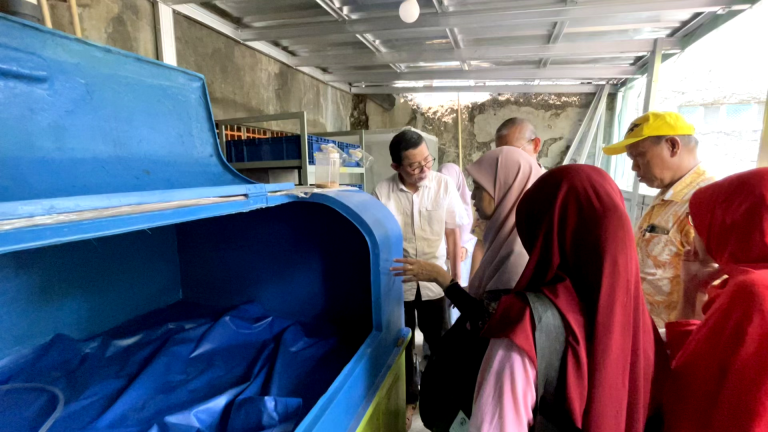
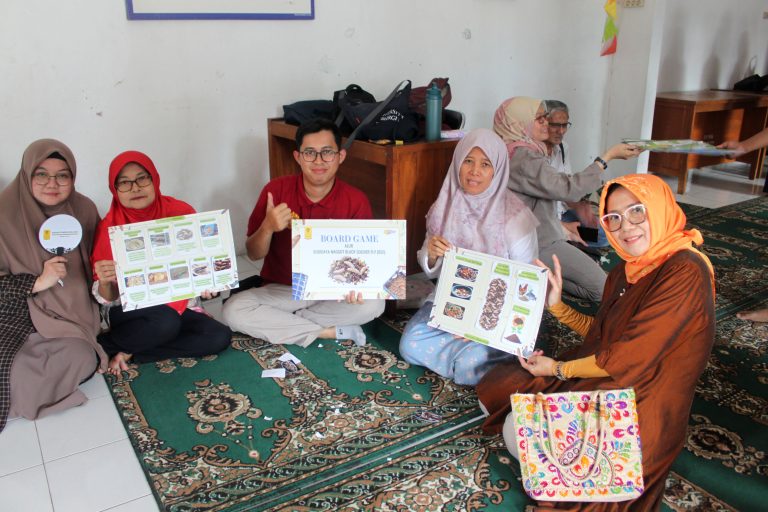
To strengthen participants’ understanding, the program continued with visits to the maggot cultivation facility and biodigester. Residents had the opportunity to observe firsthand the application of the organic waste processing technologies discussed during the presentations. The activities also included educational games, discussions on the types of organic waste suitable for maggot cultivation and biodigesters, and a composting demonstration led by Sitaresmi, M.Sc., a lecturer at the Department of Biology, FMIPA UI. These sessions gave participants opportunities to exchange ideas and explore how the waste processing methods could be applied in their respective neighborhoods.
The development of maggot cultivation and biodigester use at the community level requires proper management, from feedstock selection to hygiene and safety considerations. When managed appropriately, these initiatives can provide alternative waste treatment methods while creating opportunities for environmentally based businesses.
Through this community service grant, the Department of Biology, FMIPA UI, demonstrated how scientific knowledge can address the real needs of the community. Collaboration among lecturers, students, educational staff, and residents is expected to encourage waste management practices that go beyond sorting and continue toward more productive utilization. This simple initiative, beginning at home, is expected to foster new waste management habits while helping create a cleaner, more productive, and more sustainable environment.