
|
Depok, 29 June 2026 — The Faculty of Mathematics and Natural Sciences, Universitas Indonesia (FMIPA UI), has strengthened its collaboration with the School of Energy and Environment at the City University of Hong Kong (SEE CityUHK) to advance collaborative research in the areas of climate change, energy transition, and human resource development.
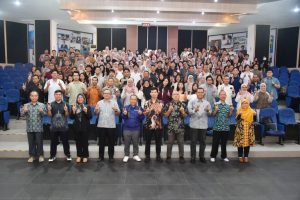
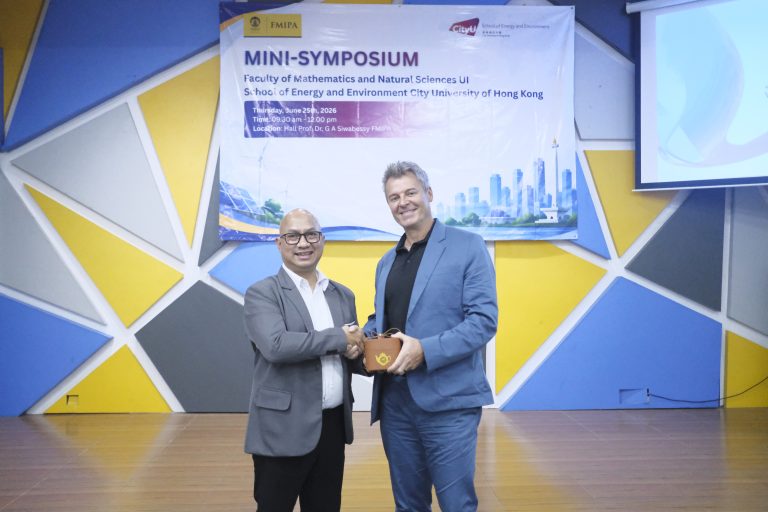
The strengthened collaboration was discussed during the Mini-Symposium between the Faculty of Mathematics and Natural Sciences, Universitas Indonesia, and the School of Energy and Environment, City University of Hong Kong, held at the Universitas Indonesia campus in Depok on Thursday, 25 June.
The collaboration builds upon the visit by the Dean of FMIPA UI and the faculty’s delegation to the City University of Hong Kong in April 2026. Since then, the two institutions have begun developing a range of collaborative initiatives, including faculty and student mobility programs, researcher exchanges, joint research and publications, the development of international research grants, and the establishment of a joint master's degree program.
Tito Latif Indra, Dean of FMIPA UI, stated that global challenges such as climate change and energy resilience require collaboration across disciplines and national borders.
“We see a strong alignment of vision between FMIPA UI and SEE CityUHK in advancing impactful scientific research. This collaboration extends beyond academic exchanges to include the development of joint research initiatives and educational programs that will cultivate globally minded human resources,” said Tito Latif Indra.
According to Tito Latif Indra, strengthening international partnerships is an integral part of the university’s efforts to produce research that addresses societal challenges while contributing to national development.
Benjamin Horton, Dean of the School of Energy and Environment at City University of Hong Kong (SEE CityUHK), explained that the school adopts an interdisciplinary approach to addressing challenges in the fields of energy, the environment, and sustainability. He also highlighted several of the institution’s research achievements, including low-carbon energy, climate change, water resource management, and the sustainability economy.
SEE CityUHK is also involved in a number of international initiatives, including the Asia Sea-Level Knowledge Hub (ASK-Hub), supported by UNESCO, and is home to several researchers who have been recognized among the world’s most highly cited scientists according to Stanford University’s rankings.
In addition to discussing the future direction of the partnership, the mini-symposium served as a forum for researchers from both institutions to present their research findings and identify opportunities for future collaboration.
Researchers from SEE CityUHK presented a range of innovations in energy-efficient buildings, passive radiative cooling materials, extreme weather modeling, urban resilience analysis, sea-level change, and energy transition policy.
Meanwhile, researchers from FMIPA UI showcased a range of research initiatives that draw on Indonesia’s unique characteristics as a tropical archipelagic nation.
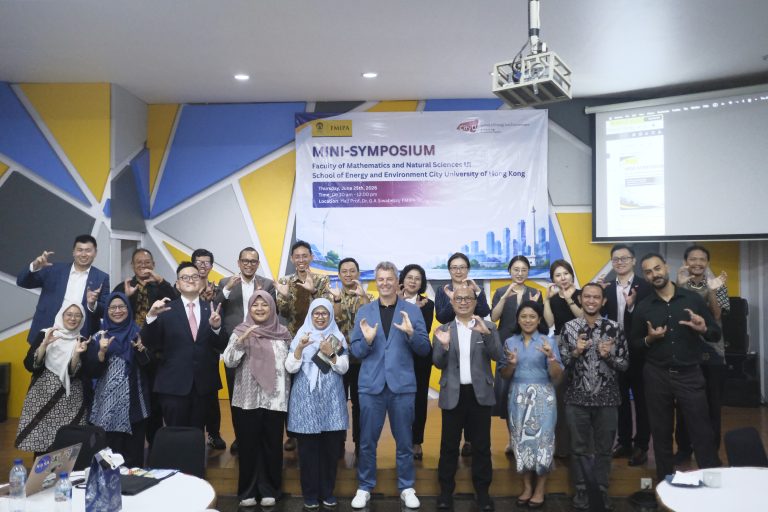
Wellyzar Sjamsuridzal presented her research on the exploration of functional yeasts from extreme geothermal environments with potential applications in various fields of biotechnology. Meanwhile, Munawar Khalil introduced the development of functional nanomaterials for applications in the energy, healthcare, and industrial sectors.
In the field of remote sensing, Masita Dwi Mandini Manessa presented the application of satellite imagery and machine learning to monitor changes in coastal ecosystems and land cover more rapidly and accurately.
Meanwhile, Reza Syahputra presented a study on the major floods that struck Sumatra in late 2025 using a tectonic geomorphology approach that integrates satellite imagery, DEMNAS (Indonesia's National Digital Elevation Model) analysis, and field surveys employing ground-penetrating radar (GPR). The approach is expected to strengthen disaster risk mitigation efforts.
From the Department of Physics, FMIPA UI, Nisa Nashrah presented Surface-Engineered Oxide Nanostructures via Plasma Electrolytic Oxidation (PEO), a technology developed in collaboration with the Nano Functional Materials Research Group at FMIPA UI. The technology has the potential to be applied in the treatment of water pollutants while enhancing the corrosion resistance of metal surfaces.
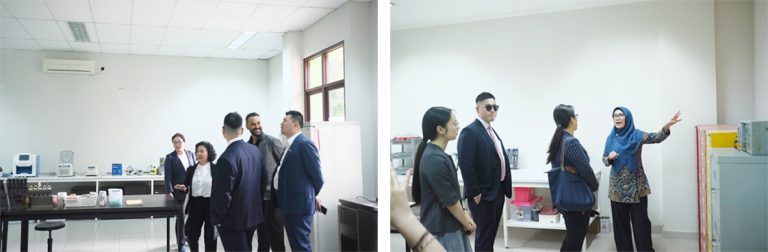
As part of the visit, the SEE CityUHK delegation toured the Center of Excellence for Indigenous Biological Resources–Genome Studies (CoE IBR-GS) laboratories at FMIPA UI. During the visit, the delegation was introduced to the center’s research facilities, ongoing research programs, and scientific publication achievements. They also received a presentation on the Universitas Indonesia Culture Collection (UICC), covering its history and establishment, microbial collections and long-term preservation methods, as well as its molecular research facilities for microbial genotype analysis.
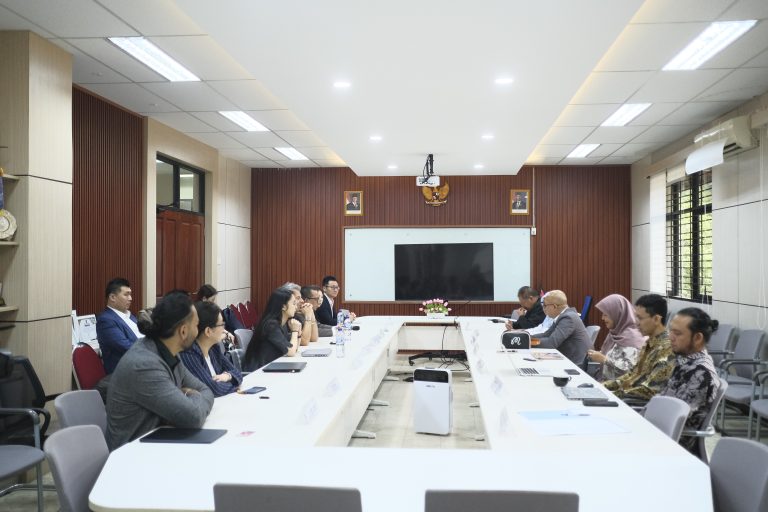
Through the panel discussion, the two institutions agreed to develop a roadmap for a Joint Master's Degree Program while identifying several priority research themes. These include the development of PEO-based catalysts for water treatment, the integration of extreme weather modeling with geological dynamics and flood sedimentation, and the development of advanced materials combined with life cycle assessment and environmental resilience studies.
For FMIPA UI, the partnership represents part of its broader effort to strengthen Indonesia’s position within the global research network. Through international collaboration, the faculty expects its research to extend beyond scientific publications and evolve into innovations that support evidence-based public policymaking while addressing pressing global challenges, including climate change, food security, water scarcity, and the energy transition.