
|
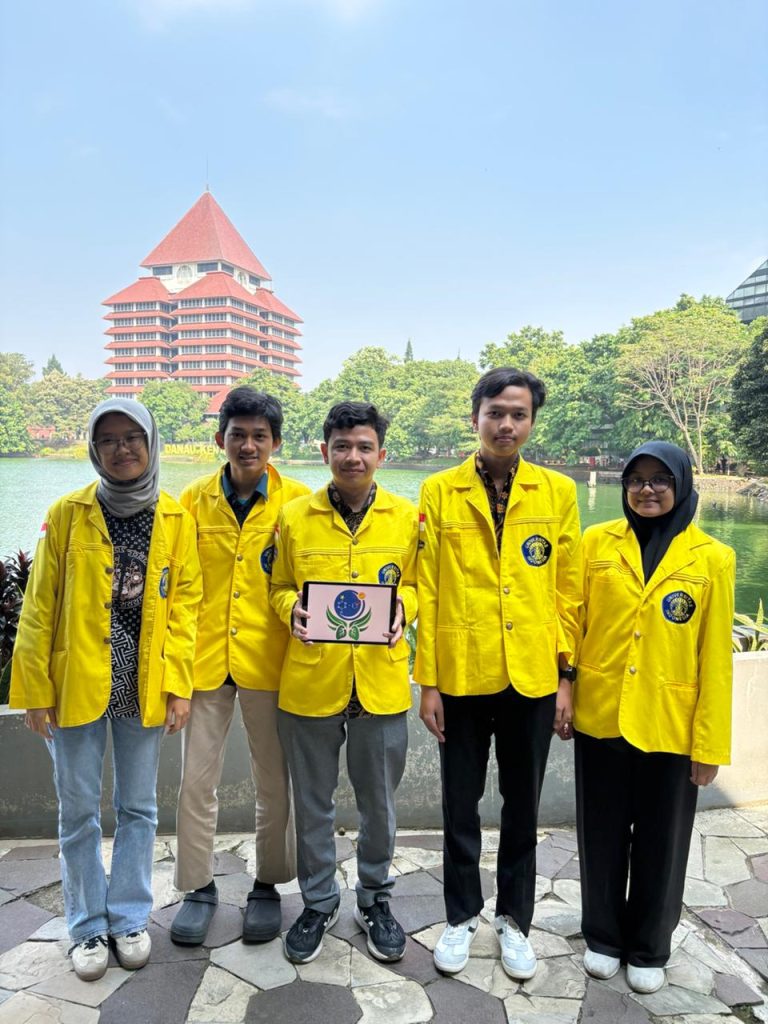
Depok, September 25, 2026 — Students of the Faculty of Mathematics and Natural Sciences, Universitas Indonesia (FMIPA UI), have developed Deep-BioOrtho, a software prototype that combines artificial intelligence and bioorthogonal chemistry to help detect potential lung cancer and simulate treatment candidates in a more targeted manner.
The innovation was developed by five Chemistry students at FMIPA UI through the Student Creativity Program–Creation Initiative (PKM-KC). The development of Deep-BioOrtho involves expertise from FMIPA UI and the Faculty of Medicine (FK) UI to integrate medical image analysis with a chemical approach to simulate lung cancer treatment.
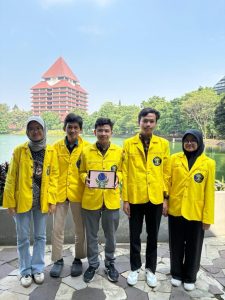
The team, consisting of Reza Nur Ikhsan, Hafiz Rizky Ramadhani, Shofiy Falihah Utami, Sulthan Raju Salim, and Adisah Fayza Arundati, developed Deep-BioOrtho through research entitled “Deep-BioOrtho: Integration of Deep Learning CNNs in the Design of Bioorthogonal Reactions for Precise Intracellular Lung Cancer Drug Activation with Minimal Side Effects.”
In the system, deep learning is used to assist in analyzing lung X-ray images. Convolutional Neural Networks (CNNs) are used to identify patterns in the images and detect indications that may be associated with lung cancer.
The analysis results are then used as a basis for developing treatment candidate simulations using a bioorthogonal chemistry approach.
“We combine deep learning CNNs and bioorthogonal chemistry to develop a software framework called Deep-BioOrtho. CNNs are used to detect potential cancer in X-ray images, while the principles of bioorthogonal chemistry are used as a framework for simulating lung cancer drug candidates with minimal side effects, based on the severity analyzed by the CNN algorithm in our software,” Reza said at the UI Campus in Depok.
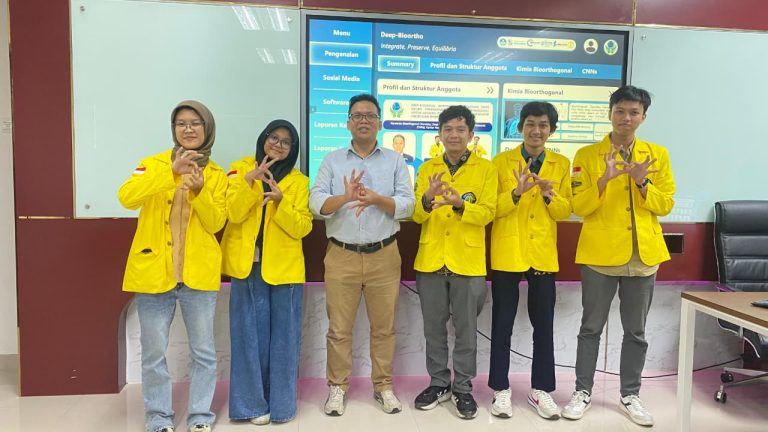
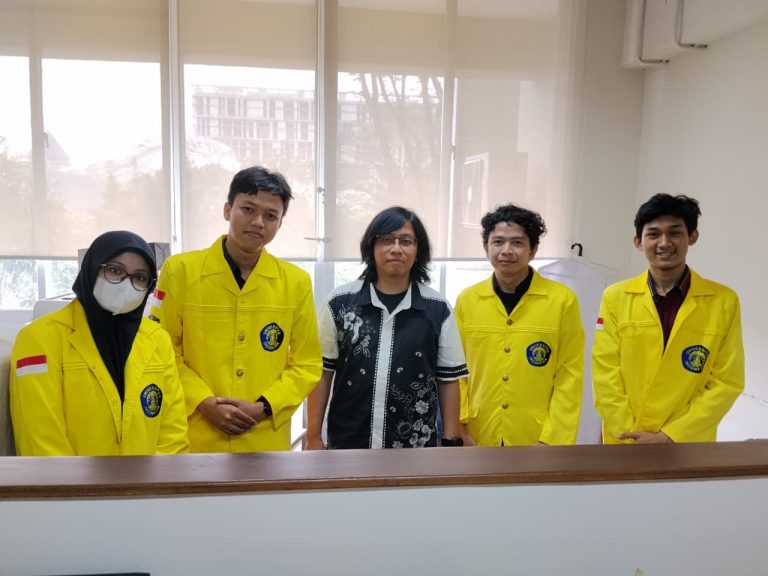
The prototype was developed under the supervision of Dr. (Eng) Pugoh Santoso, S.Si., M.Si., from FMIPA UI as the principal supervisor. Meanwhile, the medical aspects of the research were supervised by dr. Gatut Priyonugroho, Sp.P(K)-Onk., FISR, from FK UI as the field supervisor.
Dr. Pugoh said that developing Deep-BioOrtho was a challenge for the students because it combines several fields of knowledge. According to him, the process encouraged the students not only to understand concepts in chemistry and computing but also to relate them to healthcare needs.
“Initially, some people doubted the idea because it was considered too complex. However, I believe that Reza and his team’s dedication to developing this innovative research, in the form of the Deep-BioOrtho software prototype, to this stage can pave the way for better lung cancer treatment in Indonesia in the future,” said Dr. Pugoh.
Hafiz, who was responsible for designing the deep learning algorithm, said that artificial intelligence can help process information from medical images more efficiently. In Deep-BioOrtho, the image analysis is integrated with a bioorthogonal chemistry approach within a single software framework.
Bioorthogonal chemistry is an approach that enables certain chemical reactions to occur specifically within living cells without interfering with normal biochemical processes. In Deep-BioOrtho, this principle is used to simulate the possibility of more targeted drug activation based on the results of lung image analysis.
However, Deep-BioOrtho is still at the prototype stage and cannot yet be used as a diagnostic or treatment tool for lung cancer in clinical practice. The system’s accuracy and safety require further research, testing, and validation.
Gatut said that the prototype still has room for further development through subsequent research.
“The software prototype developed by Reza and his team is a highly promising preliminary approach to lung cancer and can be further developed in Indonesia toward achieving the gold standard of lung cancer management and supporting the medical field,” he said.
The development of Deep-BioOrtho demonstrates how FMIPA UI students are utilizing fundamental sciences, particularly chemistry and computing, to develop technologies that can be applied to healthcare challenges. Collaboration with FK UI also creates opportunities for developing science-based innovations that bring together laboratory approaches, computational methods, and medical needs.
The innovation subsequently led the Deep-BioOrtho team to compete in the 2026 National Student Scientific Week (PIMNAS). The team hopes that further development will produce a more thoroughly tested prototype to support lung cancer detection and the exploration of more precise treatment approaches.